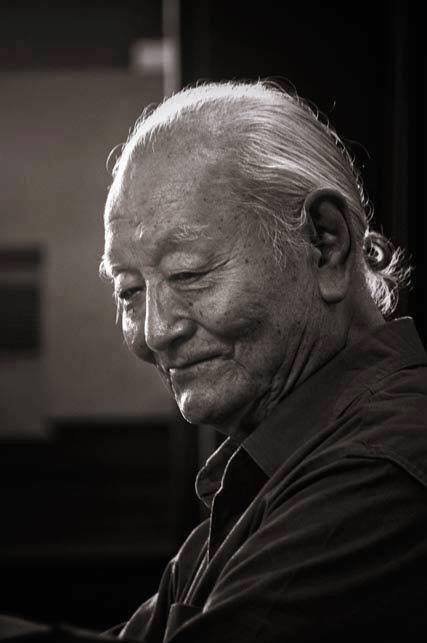
 1938–2018
Chogyal Namkhai Norbu (1938–2018) was a Tibetan master, scholar, and culture bearer who bridged an ancient world and the modern one with uncommon clarity. Known for bringing the essence of Dzogchen into direct, lived practice, he preserved a vast heritage while giving thousands a simple doorway into presence, awareness, and freedom.
Birth & Early Life
Born in Geuk near Derge in Kham, Tibet, into families deeply rooted in the spiritual lineages of the region, he was recognized early by eminent masters as a tulku. From childhood he moved among monasteries and hermitages, absorbing transmissions from Nyingma and Sakya traditions, learning ritual, philosophy, medicine, poetry, and the yogas of breath and movement that would later become Yantra Yoga. He met rare adepts like Ayu Khandro and received profound Dzogchen instructions from his uncles and teachers.
Turning Point
As Tibet fractured, he left his homeland and stepped into exile. That rupture became a path. In India he encountered the wider Buddhist world and, soon after, accepted an invitation to Italy to work with the scholar Giuseppe Tucci. What might have remained a purely academic life opened into a life of transmission. While teaching language and culture at the University of Naples, he began sharing Dzogchen and Yantra Yoga informally in living rooms. In the mid-1970s he offered full Dzogchen transmission to Western students—plain, precise, and free of sectarianism—showing that presence is immediate and practice can be woven into ordinary days.
Teachings & Contributions
Namkhai Norbu taught the three series of Dzogchen with a hallmark emphasis on direct introduction, relaxed continuity, and integration with life. He revived and systematized Yantra Yoga, the yoga of breath and movement, so practitioners could balance energy and stabilize awareness. Through his Longsal revelations—dream-born treasures—he shared practices like the Mandarava long-life and the Vajra Dance, along with upadesha rooted in ancient tantras.
He founded Merigar in Tuscany and a network of “gars” worldwide, creating spaces where community, study, and practice could mature together. He established Shang Shung Publications and the Shang Shung Institute to protect Tibetan language, medicine, history, and arts; and ASIA, a humanitarian organization serving education and heritage in Himalayan regions. As a scholar he authored influential works on pre-Buddhist Tibet and Bon, safeguarding memory while clarifying myth and history.
Core Values / Key Message
His compass never wavered: do not seek elsewhere what is already shining as your own awareness. Practice is not an escape from life but a way of being fully present within it. Methods are many—study, song, medicine, astrology, yoga, contemplation—but their heart is the same: relaxed clarity, complete presence, effortless compassion. Dreams and visions can be gateways; scholarship and service are also practice; the measure of realization is how simply and humanly we live. No ideology, no ornament, only the taste of freedom here and now.
Legacy
Decorated by the Italian Republic for cultural service, he remained, to the end, a teacher of presence: traveling, writing, consecrating spaces, and guiding a global community without losing the warmth of a living room talk. He passed at Merigar in 2018. Most of all, his insistence endures: awareness is immediate, human, and kind. When we relax into that, the ancient flame does not dim; it becomes our own.